
A translator to evaluate, passage by passage
Sebastian Nehrdich and Kurt Keutzer’s MITRA-MT paper appears in the WMT proceedings dated 28–29 October 2026. It describes a 9-billion-parameter model adapted for Buddhist literary languages and an evaluation across 17 sentence-level translation directions, with ten also tested at paragraph level. This is an analysis of that publication, not a claim that the model was released today. Unlike MITRA-lexicon, which retrieves attested word correspondences, MITRA-MT generates translations of passages. [1] [2]
First check which corpus you mean
The paper describes MITRA-parallel v2: 1,693,730 automatically aligned records, representing 2,338,400 segment pairs across Sanskrit, Tibetan and Buddhist Chinese. One record can link several segments; these are not counts of books or human-approved translations. On our 31 October check, the repository already identified v3 as current, with 1,690,655 records and a trained model that checks and corrects alignments. That automated correction is not specialist approval. Results reported for v2 should not simply be relabelled as evidence for v3. [3] [4]
There is another reproducibility limit: the linked model card describes CPO training, whereas section 4.3 of the paper evaluates a GRPO checkpoint. We could not verify an exact match between the downloadable revision and the evaluated checkpoint. [2] [5]
A strong score is not a percentage of correct meaning
For Sanskrit into Tibetan, the authors report 55.0 chrF for MITRA-MT versus 33.4 for Qwen3.5-122B. chrF measures character-sequence overlap with reference translations: 55.0 does not mean 55% semantic accuracy. In a smaller comparison in Table 4, two language-model judges instead preferred commercial systems overall. The paper also reports no representative human audit of the released v2 alignments. These are promising results under particular tests, not proof of reliable interpretation of every Buddhist passage. Monolingual training texts were not decontaminated against the evaluation suite, so performance on wholly unseen texts remains uncertain. [2]
The paper, weights and texts have different terms
ACL lists the paper under CC BY 4.0, while the translation model card declares Apache-2.0. Neither statement licenses every underlying text. The v2 README refers licensing to the repository root; the root README and v3 README checked on 31 October do not state an overall corpus licence. The evaluation README directs users to each original source’s terms and identifies Lotsawa House material as CC BY-NC 4.0. Confirm the applicable terms before redistributing a selected file or using it for training; public availability alone does not settle reuse permission. [1] [3] [4] [5] [6]
A small exercise before trusting a large corpus
Our suggested reading exercise: choose one short passage you are permitted to use and can check against its original. Record the work, edition, passage identifier, corpus version and model revision. Place the original, a reference translation and the machine draft side by side. Mark omitted negation, uncertain names, missing clauses and technical terms; do not treat fluent wording as evidence that these survived intact.
Then ask a qualified reader to examine the marked points in context and preserve both the correction and its reason. A difference may reflect a legitimate translation choice, not an error. This exercise yields a documented review of one passage; it cannot establish an accuracy rate for the whole model. Unreviewed drafts should retain that label.
Editorial scope
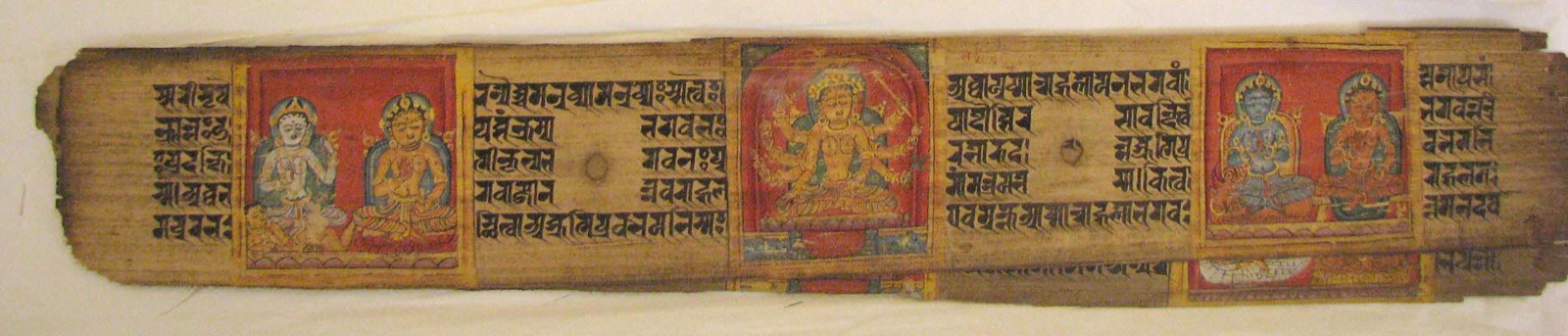
We checked the paper and the linked documentation, but did not rerun training or the benchmarks. Topic research used Perplexity Deep Research; the article and all 13 language versions were prepared and compared with AI assistance. Specialist language review remains pending. The manuscript illustration is historical context, not evidence that the illustrated leaf was part of the training data.
Sources
- Nehrdich & Keutzer — MITRA-MT (WMT 2026); DOI 10.18653/2026.wmt-main.26; ACL metadata and publication licence
- MITRA-MT — full paper, sections 3–5 and 7; Table 4 (October 2026)
- MITRA-parallel — repository snapshot, v2/v3 statistics and linked documentation; checked 31 October 2026
- MITRA-parallel v3 — records and automated post-correction; checked 31 October 2026
- MITRA translation model card — CPO, separate evaluations and Apache-2.0 declaration; inspected revision 66869d9
- MITRA-MT evaluation release — source-specific attribution and reuse conditions