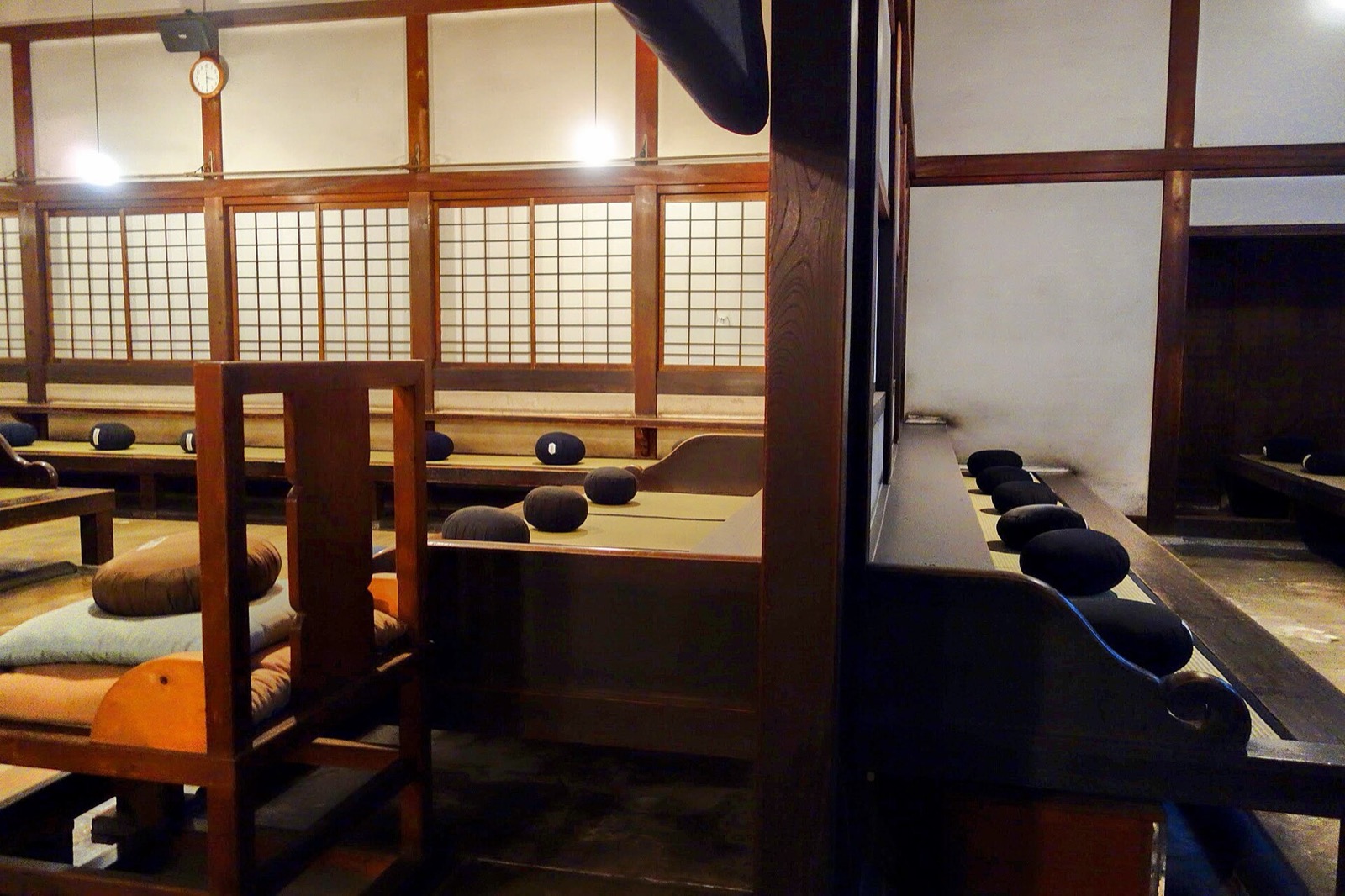
01 Buddhism & science
Buddhism and Science: A History of Dialogue and the Craft of a Shared Question
How Buddhist traditions and science can collaborate: Mind & Life, translation, research design, education and the limits of claims.

Buddhist traditions & contemporary knowledge
Open texts, research and tools.

Our aims
Three open programmes: a laboratory of worlds, the question of whether the universe can be described as a Buddhist neural network, and Buddhist texts in plain words.
All projects and aimsI. The purpose of the institute
Matreya is an independent, non-commercial initiative in its founding phase. Our purpose is to study Buddhist knowledge alongside contemporary sciences and develop responsible technologies and accessible research tools.
One of our missions is to catalogue accessible Buddhist texts and build a documented corpus for research and authorised AI training. As the project grows, we will seek explicit agreements with schools, libraries, translators and rights holders. Access does not itself grant training rights; safer AI behaviour remains a hypothesis to test.
Read about the methods & limitations →Read the research charter →II. The library
In-depth reviews and a founding essay on the history of collaboration, the study of mind, digital heritage and AI ethics. Each article includes a contents list, illustrations, sources and open questions.
01 Buddhism & science
How Buddhist traditions and science can collaborate: Mind & Life, translation, research design, education and the limits of claims.
02 Mind & practice
How to read EEG, fMRI and neuroplasticity claims about meditation, including attention studies, null findings and methodological limits.
03 Mind & practice
How experiential reports, interviews and neuroscience can inform one another without treating introspection or brain data as complete explanations.
04 Compassion & ethics
Buddhist compassion, experimental altruism and research ethics: how to connect care, evidence and an institute’s everyday decisions.
III. The programme
Provenance, translation, terminology, conditions of use and the context of transmission.
Attention, experience and compassion: philosophical precision and appropriate research methods.
Source retrieval, citation checking, error evaluation and human responsibility for outcomes.
First proposed pilot
A comparison with and without retrieved passages, with a documented protocol, separate retrieval and answer evaluation, and an error record. The study is in preparation.
Read about the methods & limitations →IV. Participation
Discussions, questions, sources, translations and whatever help you can offer all happen in the institute's open forum on Telegram. Write in the language you are comfortable with.
The forum is public: please do not post personal data or private correspondence.
Without Telegram: email and RSS: [email protected] · RSS