
1. The table we have
Matreya’s present workshop fits around a table: a MacBook Air, a router and a connected Android smartphone serving as a server. Its founder describes ordinary clutter and cigarettes, too. There is no reason to turn these details into a legend of inspired disorder. They describe the working conditions of a young initiative; they tell us little about the accuracy of a reading or the durability of a digital copy.
Yet this small starting point gives the work a useful scale. A page can be checked. An uncertain letter can remain uncertain. A correction can name its evidence. Before a library grows into a building, it begins with the care taken over such decisions.
2. Collections with their own voices
Potala2 is a working name for a future ambition. Its proposed digital part would connect catalogues and authorised copies of texts from many Buddhist traditions. A reader should be able to discover related material across collections while still seeing where each edition, translation and interpretation comes from. A shared catalogue need not settle a disagreement between commentaries or make one lineage’s vocabulary the default for everyone.
We envisage sections that participating libraries and communities would describe in their own terms. Names, scope and public credits would be agreed with those participants. This federation is a proposal: no community is represented by assumption, and no complete collection, partnership or permission is established by announcing it. The name does not indicate institutional affiliation with the historic Potala.
3. A path back to the page
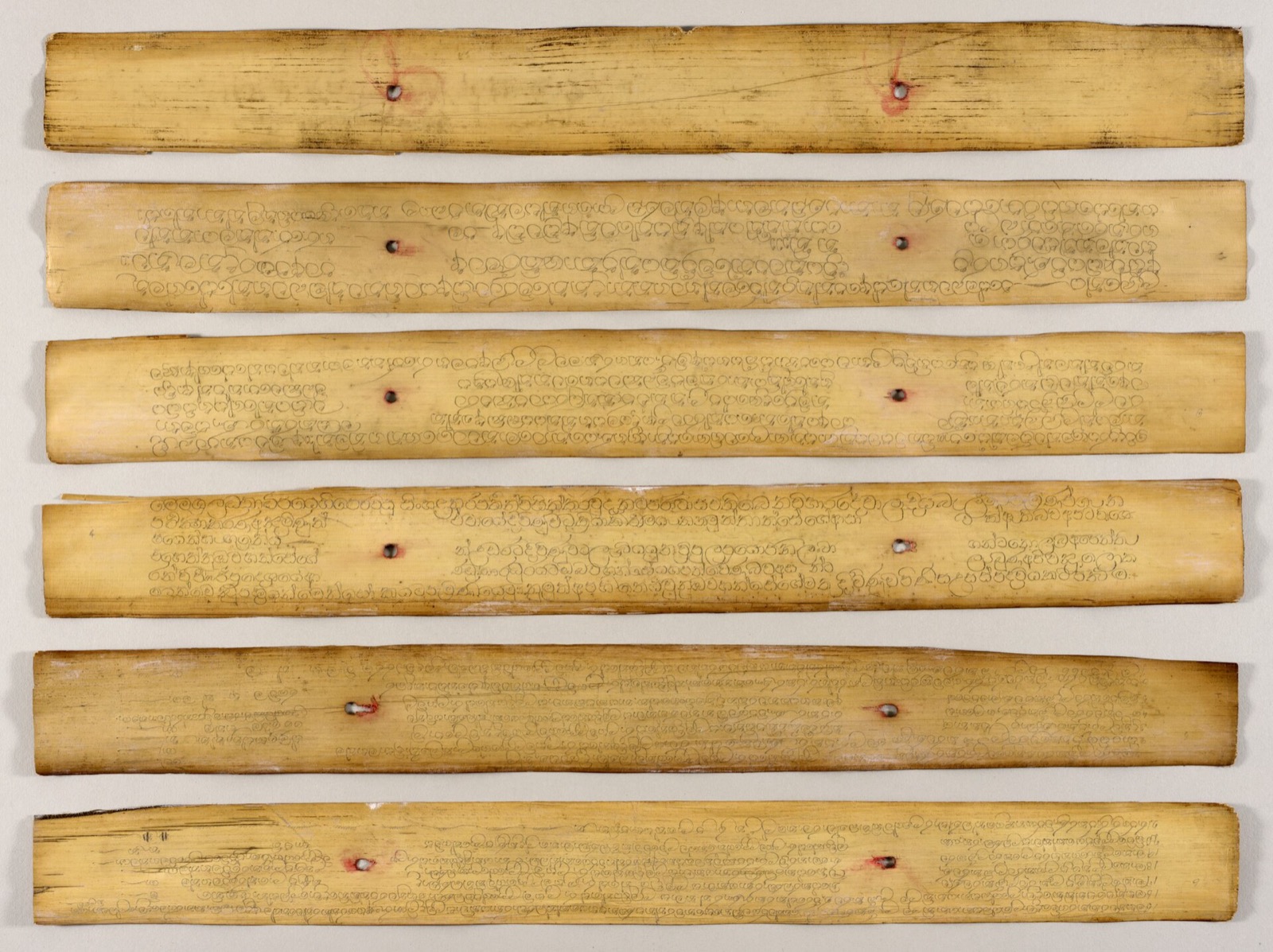
Two public standards offer useful starting points. IIIF Presentation describes an object and the sequence of views through which a reader encounters it; it also provides fields for rights information and attribution. W3C Web Annotation describes links between a note and the resource, or part of a resource, that it concerns. We propose to examine these standards for keeping a reading close to its source. [1] [2]
Our proposed record would distinguish the page image, machine reading, corrected transcription, translation and commentary. Each change would retain its source, version and review status. A convincing demonstration would let another reader follow a disputed phrase back to the page and inspect the correction. Choosing a standard alone does not demonstrate that this works.
4. Permission belongs to the record
The proposed archive would record both access conditions and conditions for further use. Library of Congress cataloguing guidance makes this distinction explicit. For each candidate item, we would consult the supplying archive’s official record and current terms, document the intended action, and retain the permission or other applicable basis. An unresolved rights question would stay visible. A reference to a collection would not authorise copying it. [3]
The same care extends to interpretation. We would ask participants how they wish to describe their materials, retain relevant restrictions and distinguish a contributor’s account from a whole tradition’s position. Differences between sources deserve a place in the catalogue. They are part of what a reader comes to study.
5. A future home, a present test
In the longer view, Potala2 imagines a physical library and temple in Bulgaria, with spaces for libraries and communities to present themselves. This remains a preliminary concept. A location, financing, permissions, stewardship and the wishes of possible participants would require their own decisions. The table on which today’s work happens should remain visible beside that distant prospect.
For now, the useful test is modest: can a reader trace a text, understand its limits and challenge an explanation? This essay proposes a method; it reports no preservation trial or completed federation. Drafting and translation used AI, and specialist review is pending. We checked the cited public standards, not the rights of a new collection. The next page should earn trust through evidence.
Potala2 is a proposed place for dialogue and cooperation among Buddhist schools, libraries and researchers. Shared work would include authorised text archives and translation, while each tradition retains its own voice.
A shared library, dialogue hall and translation workspace connect independent pavilions for participating communities and libraries. Further pavilions can be added through consultation.
A shared centre, room to grow
A shared library, dialogue hall and translation workspace connect independent pavilions for participating communities and libraries. Further pavilions can be added through consultation.
- Shared centre
Library · dialogue · translation
- Independent pavilions
Spaces for representatives and libraries, with each participant retaining its own voice.
- Open to expansion
New pavilions and connections can be added as participation develops.
The number and position of pavilions are illustrative. No fixed shares, representation rights or voting power are assigned by this drawing.
Concept only: no built campus, confirmed partners or diplomatic status.
An open catalogue of traditions
A starting index, not a complete classification or a list of partners. These headings overlap; communities describe their own affiliations. Naming a tradition does not establish participation or permission to copy or train on its texts.
- Theravada: its diverse monastic lineages and lay communities.
- East Asian Mahayana: Chan / Seon / Zen, Pure Land, Tendai, Nichiren and other traditions.
- Tibetan traditions: Bodong, Gelug, Jonang, Kagyu, Nyingma, Sakya, Shalu / Buton and other lineages.
- Japanese esoteric traditions, including Shingon.
- Newar Buddhist traditions of Nepal.
- Modern and cross-tradition communities, including Ambedkar-inspired movements.
- Historical textual traditions: a catalogue of sources, not a claim of present-day representation.
- Dialogue with Yungdrung Bön, respecting its distinct self-identification.
Suggest an addition or correction
Text and translations were prepared with AI assistance; specialist and community review is pending.
Sources for this starting index: Harvard Pluralism Project · Japan Buddhist Federation · Jonang Foundation · Koyasan · Rubin Museum · Triratna · Ligmincha